Index / Past / №07 / High-Power Rocketry

AX-1.0 Patriot

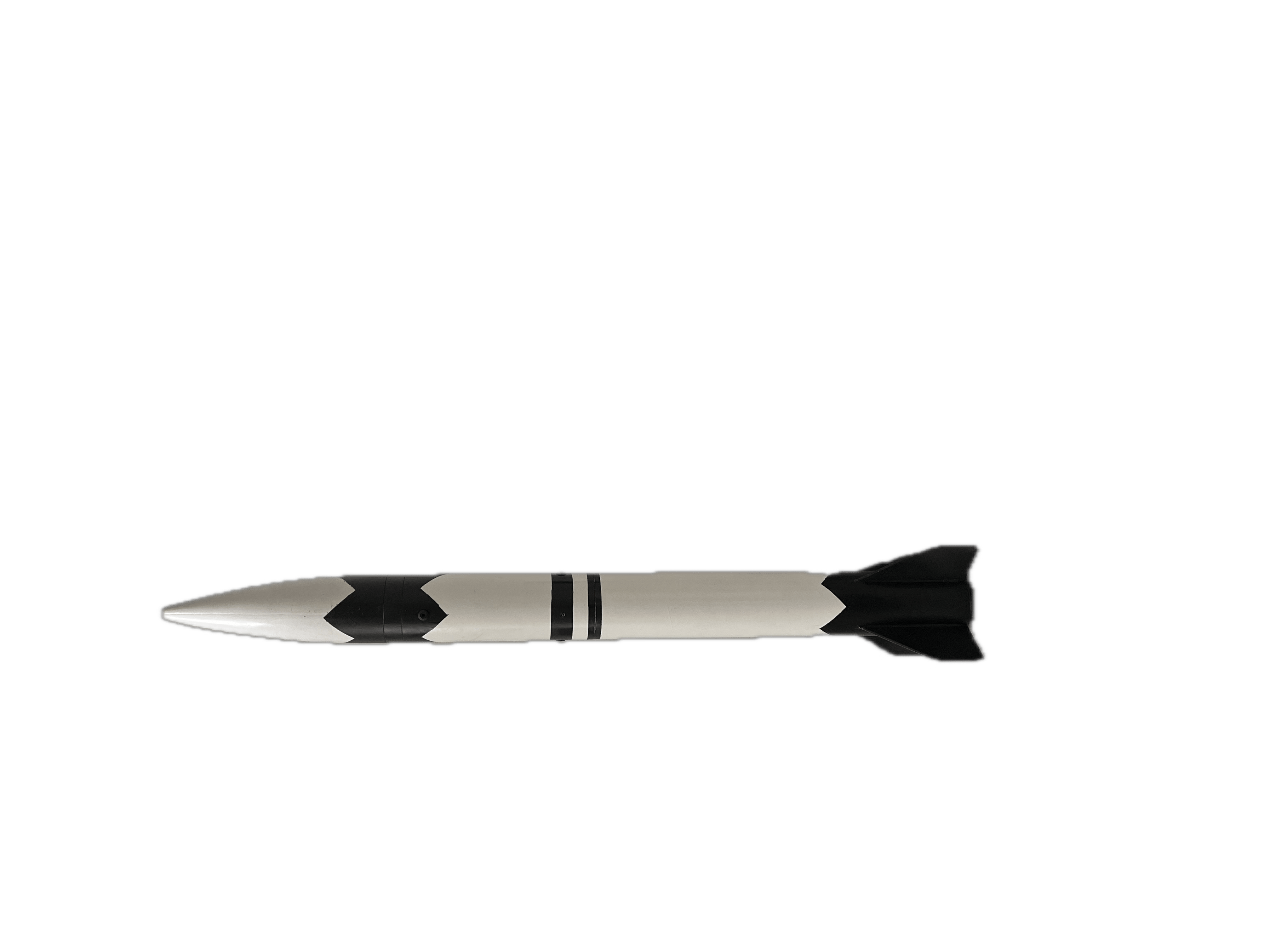
AX-1.0 is the certification vehicle of the rocketry line: a LOC Precision Patriot airframe (4.0 in diameter, 40 in length) assembled and flown for Tripoli Rocketry Association Level 1 certification. The build covers the fundamentals done properly — epoxy fillets, through-the-wall fin mounting, rail buttons, positive motor retention — then goes further: the airframe was composite-reinforced after certification to carry Level 2 motor loads, making it a dual-purpose platform rather than a shelf trophy.

MotorH100W-14A
Total Impulse227 N·s
Airframe4.0″ × 40″
OutcomeTRA Level 1
Propulsion & Recovery.02

The certification flight flew an AeroTech H100W-14A single-use motor — 227 N·s total impulse, with a 14-second delay grain timing apogee deployment. Recovery is single-deploy: a ~1.2 g black-powder ejection charge pressurizes the airframe and extracts the parachute. Charge sizing was validated through ground ejection testing before flight rather than taken from vendor tables, and the vehicle was recovered undamaged — the L1 requirement.

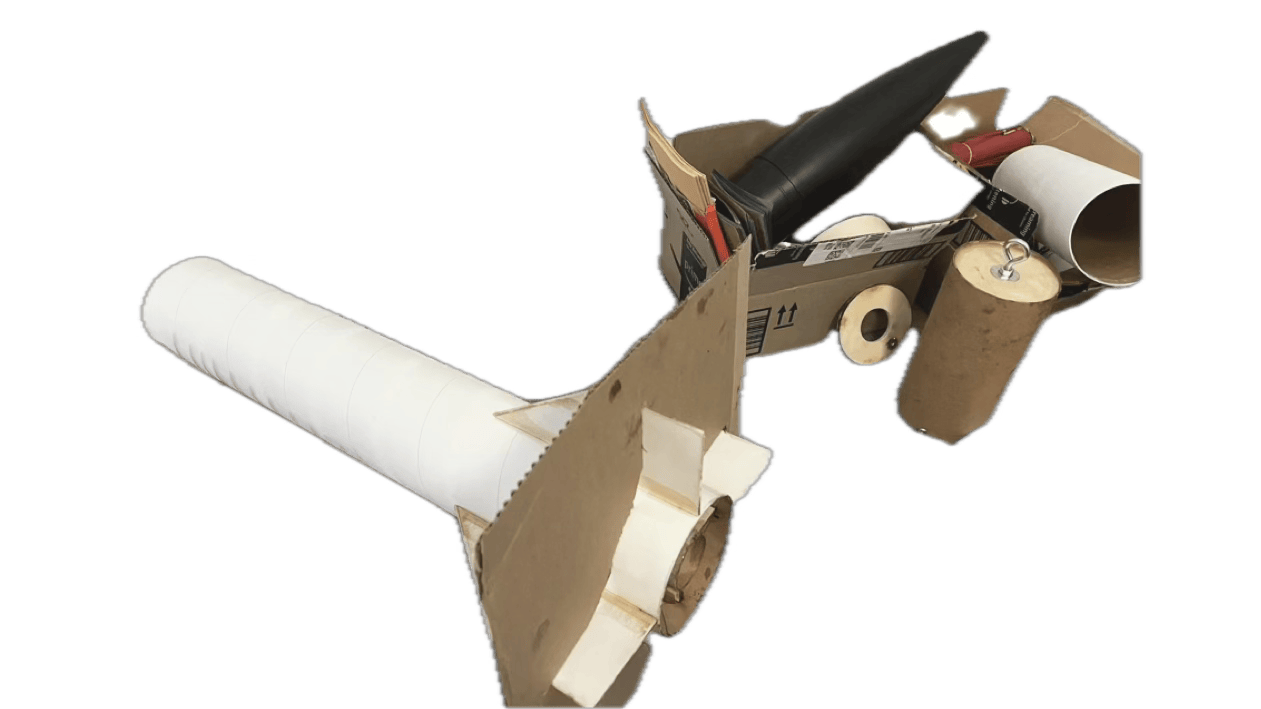
Final build of the AX-1.0 Patriot rocket
Level 2 Reinforcement.03

After certification, the stock cardboard airframe was upgraded for higher-impulse flight: the paint finish was stripped, the tube laminated with epoxy, and a form-fitted PETG-CF armor shell (1/16″ wall) bonded over it — roughly a 3× increase in hoop strength for under 150 g of added mass. The reinforcement targets the 800+ N peak thrust of an AeroTech J425R (609 N·s, ~3,800 ft predicted apogee), with the shell's 250 °C glass-transition temperature adding thermal margin through the high-speed portion of flight.

AX-1.0 under construction
Simulation.04

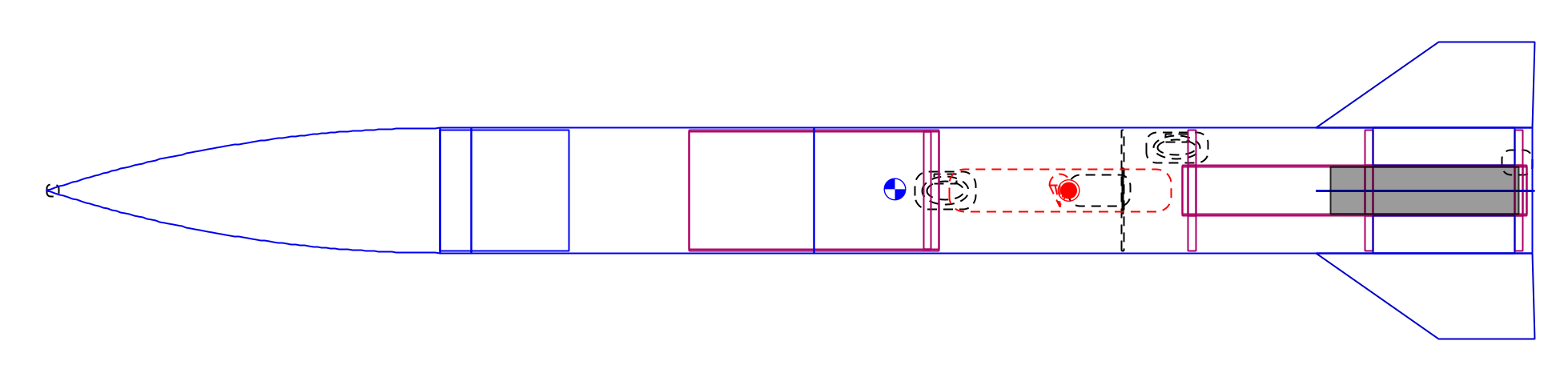
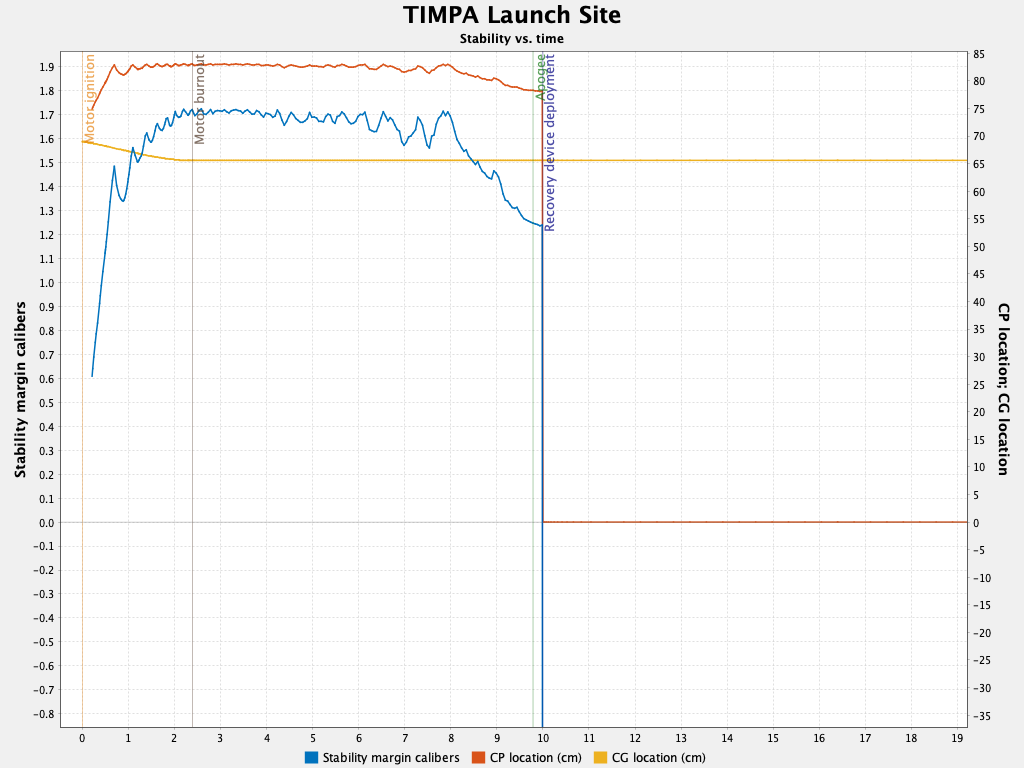
Every configuration was modeled in OpenRocket before it flew: static stability margin held above one caliber through propellant burn-off, CG/CP tracked across the burn, apogee predicted per motor. ANSYS Mechanical static cases checked fin-can and airframe loads at peak thrust, and Fluent CFD runs examined external airflow and stagnation heating — trivial at L1 speeds, but the same workflow scales to the flights where it isn't.

OpenRocket design model of AX-1.0
Flight Data.05

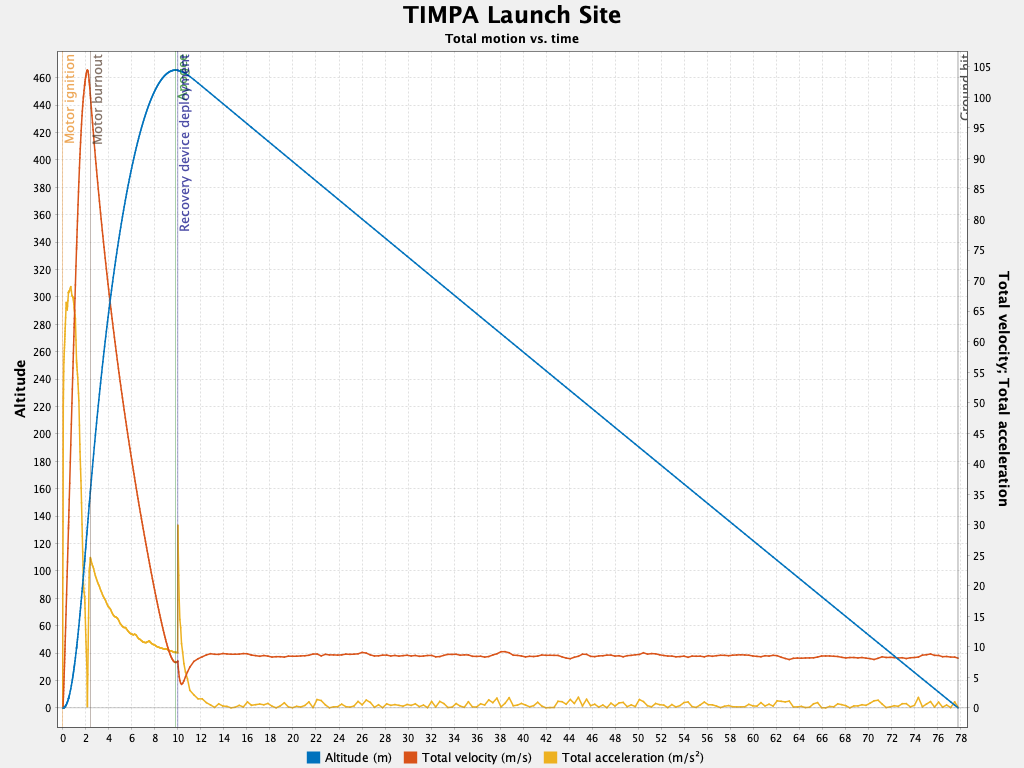
Stability and total-motion plots from the OpenRocket model: margin versus time through the burn, and altitude, velocity, and acceleration through apogee and recovery. The certification flight tracked the simulated envelope, closing the loop between model and hardware. Click the stack to cycle plots; double-click to enlarge.

Stability margin plot Total motion plot