Index / Past / №08 / High-Power Rocketry

AX-1.1 DEMONstrator

AX-1.1 is a fully 3D-printed modular rocket platform — a proof of concept for printed airframes and threaded, reusable interfaces aimed at parallel Level 1/2 missions. The body tube prints in carbon-fiber-reinforced PETG with honeycomb infill; the motor mount in PPA-CF, where motor heating dominates. Designed in Fusion 360 with every interface — motor mount, centering rings, nosecone ballast — engineered to thread together and come apart again, instead of being glued shut.

Body TubePETG-CF
Motor MountPPA-CF
Payload Descent2.8 m/s
TelemetryLoRa 433 MHz
Payload & Avionics.02

The vehicle carries a biomimetic samara payload — a maple-seed-inspired single wing on an optimized NACA 4412 cambered airfoil that autorotates at 450–550 RPM, holding a controlled 2.8 m/s terminal velocity: a 65% reduction in descent rate over a ballistic fall, gentle enough to recover electronics from altitude.

On board: an ESP32 microcontroller, MPU6050 6-DOF IMU sampling at 100 Hz, BMP280 barometer, and a LoRa SX1278 433 MHz radio with 2 km ground-station range — streaming acceleration, rotation rate, altitude, and GPS for post-flight trajectory reconstruction. A Raspberry Pi camera records flight video, and adjustable nosecone ballast trims static margin per motor.

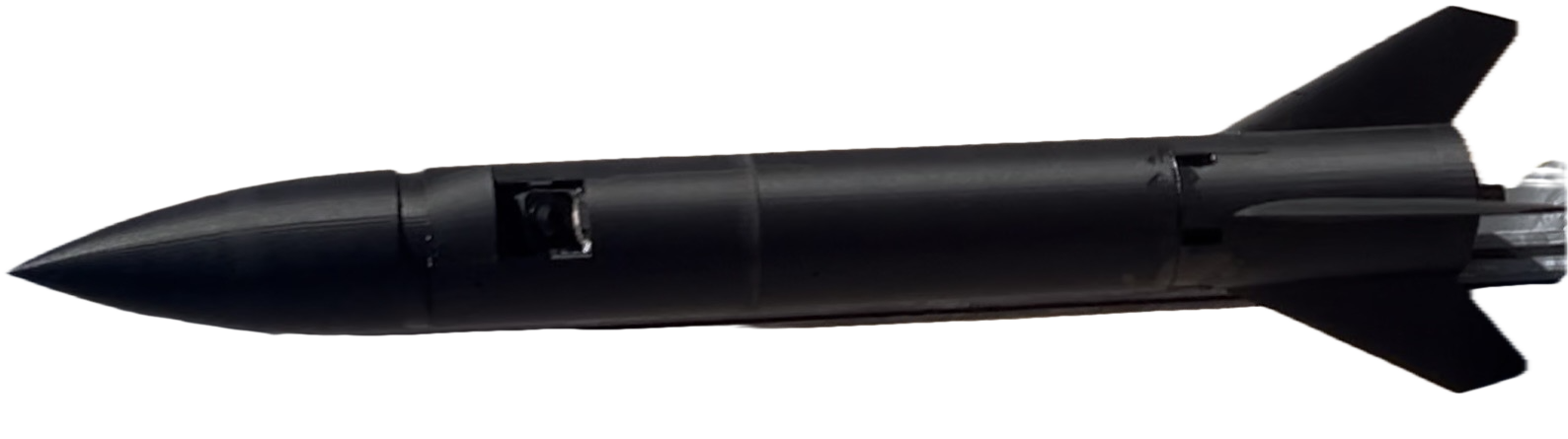
Final build of the AX-1.1 DEMONstrator
Print & Assembly.03

Threaded interfaces replace adhesives wherever loads allow, so motor mounts and centering rings swap between missions instead of being rebuilt. Filament selection came from print trials, not datasheets alone — PETG-CF for stiffness-to-weight in the body, PPA-CF where heat soak from the motor case governs. The samara's aerodynamics were refined in ANSYS Fluent — blade pitch swept across 10–14° for stable autorotation — then validated with instrumented 50 ft drop tests and high-speed video motion analysis before committing to flight.

Structures & Aero.04

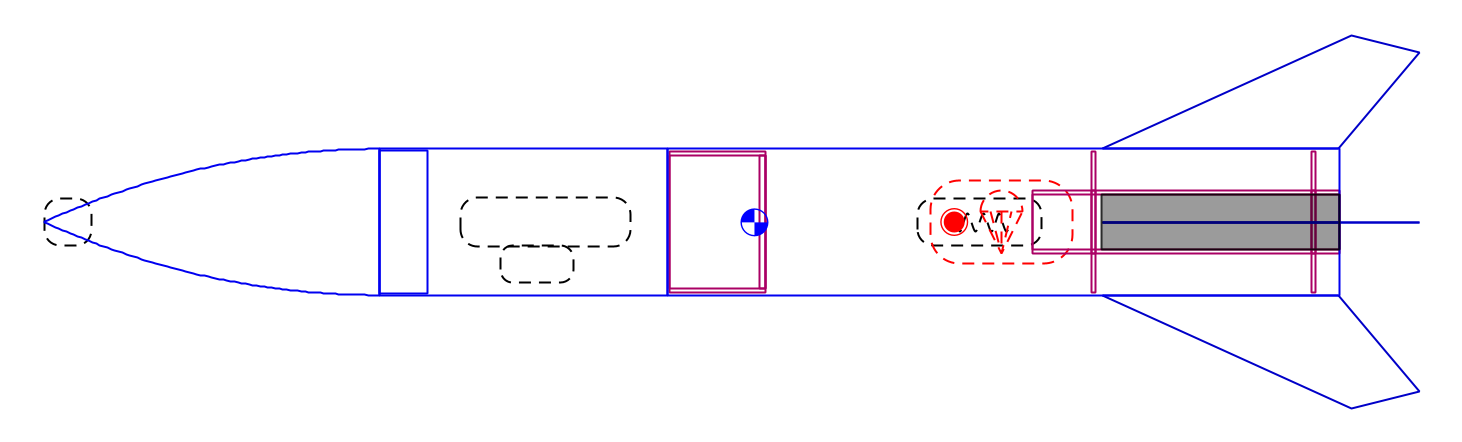
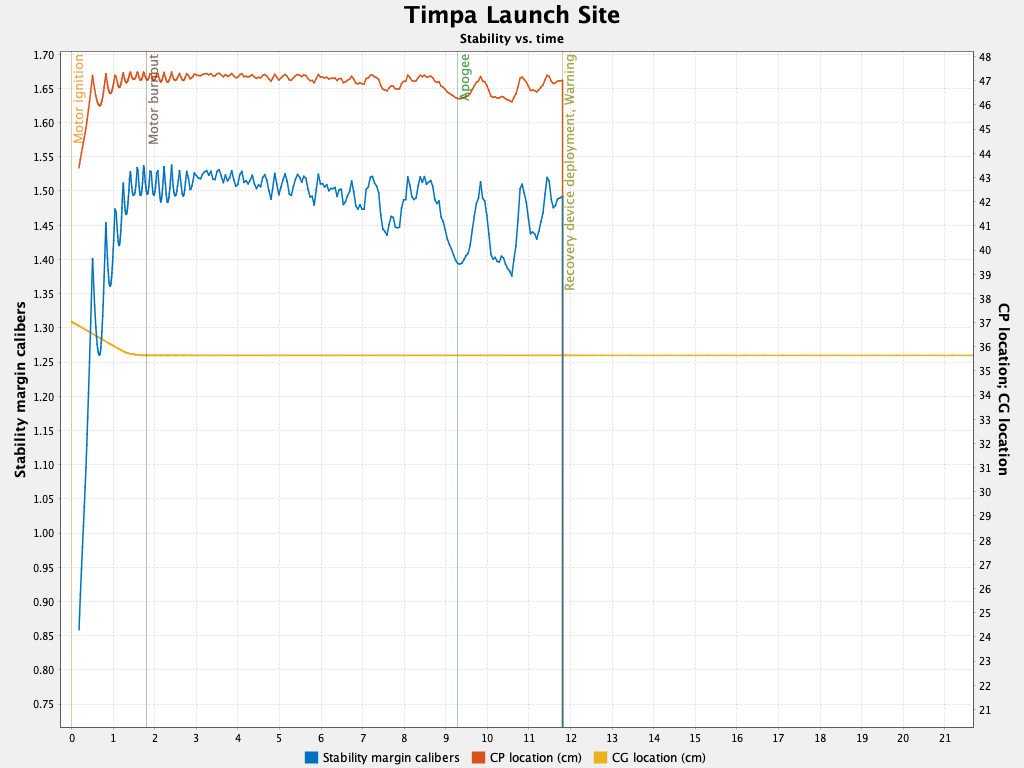
ANSYS Mechanical verified the printed fastening solutions and modular mounts under thrust loads; Fluent CFD checked external airflow and aerodynamic heating against the printed materials' thermal limits. OpenRocket models hold static stability above one caliber and predict apogee across both L1 and L2 motor configurations — the platform is sized so the same airframe flies both missions.

OpenRocket design model of AX-1.1
Flight Data.05

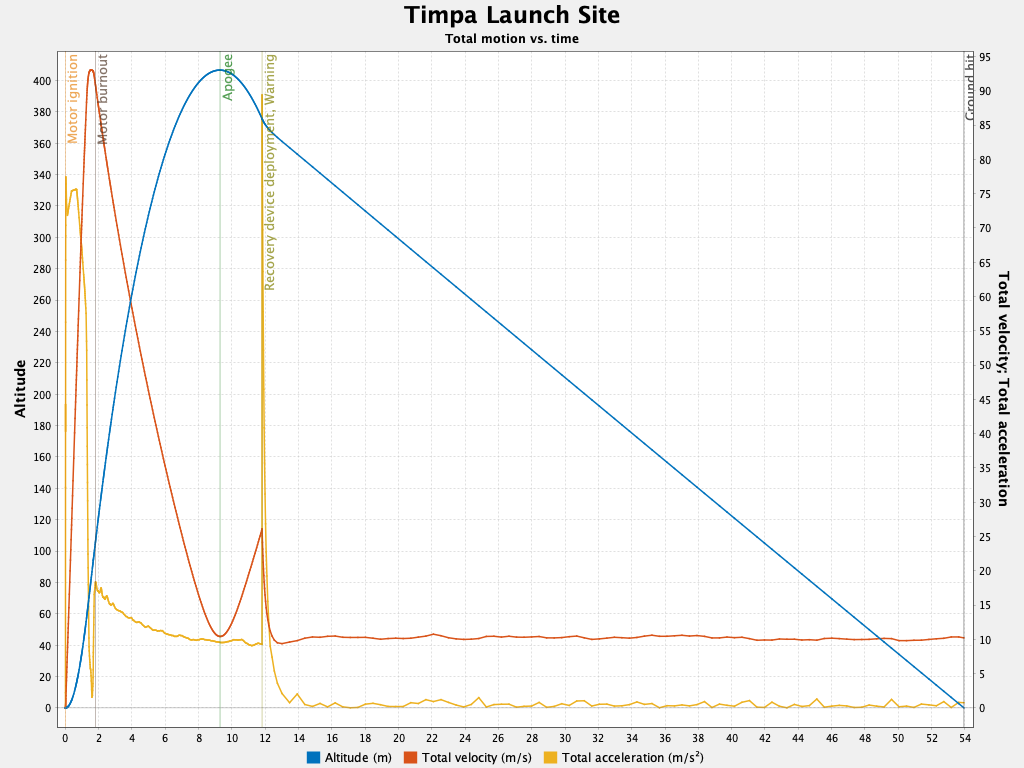
Stability and total-motion plots for the printed airframe across candidate motors. The plots bound the envelope the structure was sized against — margin through the burn, peak velocity, and descent rates for both the booster under parachute and the samara in autorotation. Click the stack to cycle plots; double-click to enlarge.

Stability margin plot Total motion plot